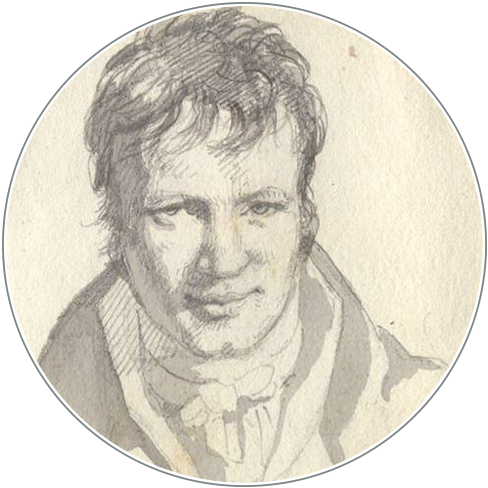
Alexander von Humboldt. L’introduction au Cosmos. Prodromes de la pensée échologique
DOI:
https://doi.org/10.18443/406Keywords:
physionomie du globe, complémentarité des régions du monde, jouissance scientifique, philosophie de la nature, Chaîne des êtresAbstract
In the introduction to Cosmos, Alexander von Humboldt develops a number of themes that can be linked to the emergence of ecological thought. He asserts that understanding the interaction of the forces of nature requires taking all regions of the world into consideration. The understanding of the totality of natural phenomena, combining the precise study of climate, plants, minerals, and celestial bodies with human history, generates a sense of fulfillment. The chain of beings in nature is comparable to that of humankind in history. Humboldt draws inspiration from the geographer Ritter, who characterized the physiognomy of the globe, the astronomer Lalande, and the mineralogist Elie de Beaumont. The physics of the world, presented as the science of the Cosmos, addresses partial facts because of their connection to the whole. Environmental questions are foreshadowed in Humboldt’s definition of science.

Downloads
Published
Issue
Section
License
Copyright (c) 2026 Michel Espagne

This work is licensed under a Creative Commons Attribution-NonCommercial 4.0 International License.
HiN operates under a Creative Commons-Licence (CC BY-NC 4.0), which permits the reproduction of articles, free of charge, for non-commercial use only and with the appropriate citation information. All authors publishing with HiN accept these terms of publication.
Authors retain the copyright for their articles and reviews. Copyright of the layout and design of HiN articles remains with the journal and cannot be used in other publications.